Now Reading: Oil Marketing Companies Signal Potential Fuel Price Hikes: Rs 12 Per Litre Threshold Proposed to Address Financial Losses
-
01
Oil Marketing Companies Signal Potential Fuel Price Hikes: Rs 12 Per Litre Threshold Proposed to Address Financial Losses
Oil Marketing Companies Signal Potential Fuel Price Hikes: Rs 12 Per Litre Threshold Proposed to Address Financial Losses

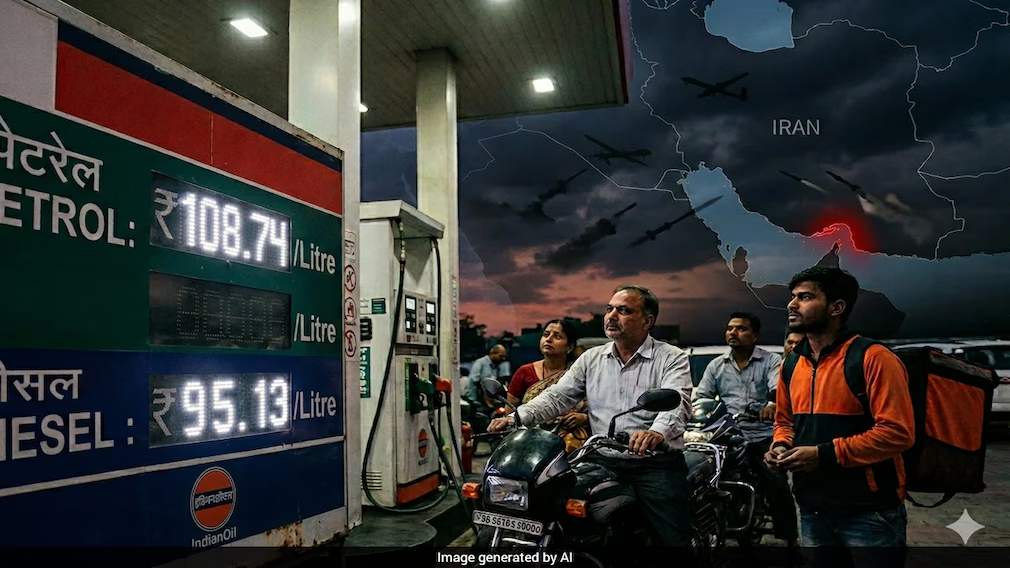
Oil Marketing Companies operating in India have indicated that fuel prices may require substantial increases, potentially reaching Rs 12 per litre, to adequately compensate for mounting financial losses accrued through current pricing structures. The assertion from major OMCs raises critical questions about sustainability of existing fuel price frameworks and the complex interplay between government price controls, international crude oil volatility, and corporate financial viability.
OMCs including Indian Oil Corporation, Bharat Petroleum, and Hindustan Petroleum have struggled with compressed margins as international crude oil prices fluctuate while domestic retail price regulations have constrained their ability to pass these costs entirely to consumers. This pricing squeeze has created significant financial strain, particularly as companies attempt simultaneously maintaining profitability, investing in infrastructure upgrades, and managing operational expenses without substantial price relief.
The proposed price increase would represent substantial escalation from current levels, carrying profound implications for Indian consumers already grappling with inflationary pressures across multiple economic sectors. Transportation costs would inevitably surge, cascading through supply chains and potentially exacerbating inflation affecting agricultural products, manufactured goods, and essential services. Middle and lower-income households particularly vulnerable to fuel price shocks would face intensified economic pressure affecting discretionary spending and household budgets.
Government faces competing policy objectives balancing OMC financial sustainability against consumer welfare and broader economic stability. Permitting unrestricted price increases addresses corporate losses but risks inflation acceleration and political backlash. Maintaining price controls protects consumers but compromises OMC financial health, potentially undermining investment capacity for infrastructure modernization, renewable energy transitions, and operational improvements.
International crude oil price dynamics remain unpredictable, complicating long-term pricing strategies. Geopolitical tensions, production decisions by OPEC nations, and global demand fluctuations create volatile cost environments that complicate both government policy formulation and corporate financial planning. OMCs argue that current pricing structures don’t adequately compensate them for these external shocks.
Energy economists emphasize that sustainable pricing mechanisms must balance legitimate corporate profitability concerns with consumer affordability and macroeconomic stability. Policy adjustments may require gradual, calibrated price increases coupled with targeted consumer support mechanisms protecting vulnerable populations while acknowledging genuine OMC financial constraints requiring resolution through transparent, consultative approaches engaging all stakeholders.
Stay Informed With the Latest & Most Important News











Advertisement